
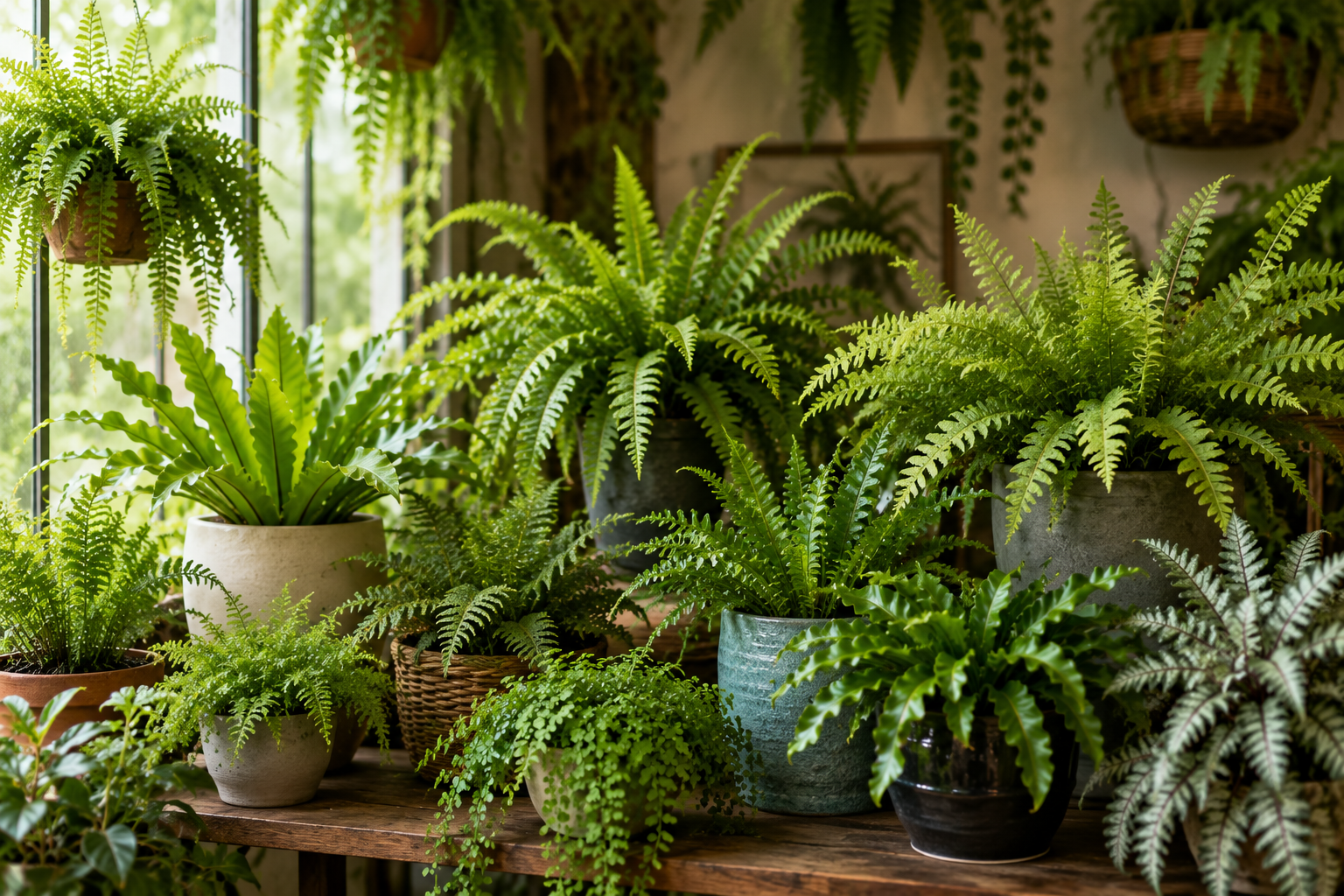
Ferns are among the easiest and most elegant plants you can add to your home or garden. Their soft, feathery fronds create a lush, tropical feel while requiring relatively little maintenance. With hundreds of fern varieties available, there’s a perfect choice for almost every space, from shaded garden beds to bright indoor rooms.
In this guide, you’ll discover popular fern varieties and learn how to keep them healthy throughout the year.
Why Choose Ferns?
Ferns have remained popular for generations because they offer timeless beauty and thrive in places where many flowering plants struggle.
Benefits of growing ferns include:
- Beautiful textured foliage
- Excellent shade tolerance
- Low-maintenance care
- Great for containers and hanging baskets
- Suitable for both indoor and outdoor spaces
Popular Fern Varieties
Boston Fern
One of the most recognizable fern varieties, the Boston Fern features long, arching fronds that look beautiful in hanging baskets and covered porches.
Best for:
- Indoor plant displays
- Hanging baskets
- Shaded patios
Maidenhair Fern
Maidenhair Fern is known for its delicate, lace-like leaves and graceful appearance.
It prefers consistently moist soil and higher humidity, making it a favorite for bathrooms and humid indoor spaces.
Bird’s Nest Fern
Unlike traditional ferns, Bird’s Nest Fern has broad, wavy leaves that grow from a central rosette.
It brings a modern tropical look to homes and offices.
Japanese Painted Fern
This ornamental garden fern stands out with silver-gray foliage accented by burgundy stems.
It’s an excellent choice for woodland gardens and shaded borders.
Autumn Fern
Autumn Fern produces new fronds in coppery-orange shades before maturing into rich green.
Its colorful foliage adds year-round interest to landscape beds.
Staghorn Fern
Staghorn Fern grows differently from most ferns and is commonly mounted on wood or displayed on walls.
Its dramatic appearance makes it a striking focal point indoors.
Light Requirements
Most fern varieties prefer indirect light or partial shade.
Ideal locations include:
- North-facing windows
- Covered patios
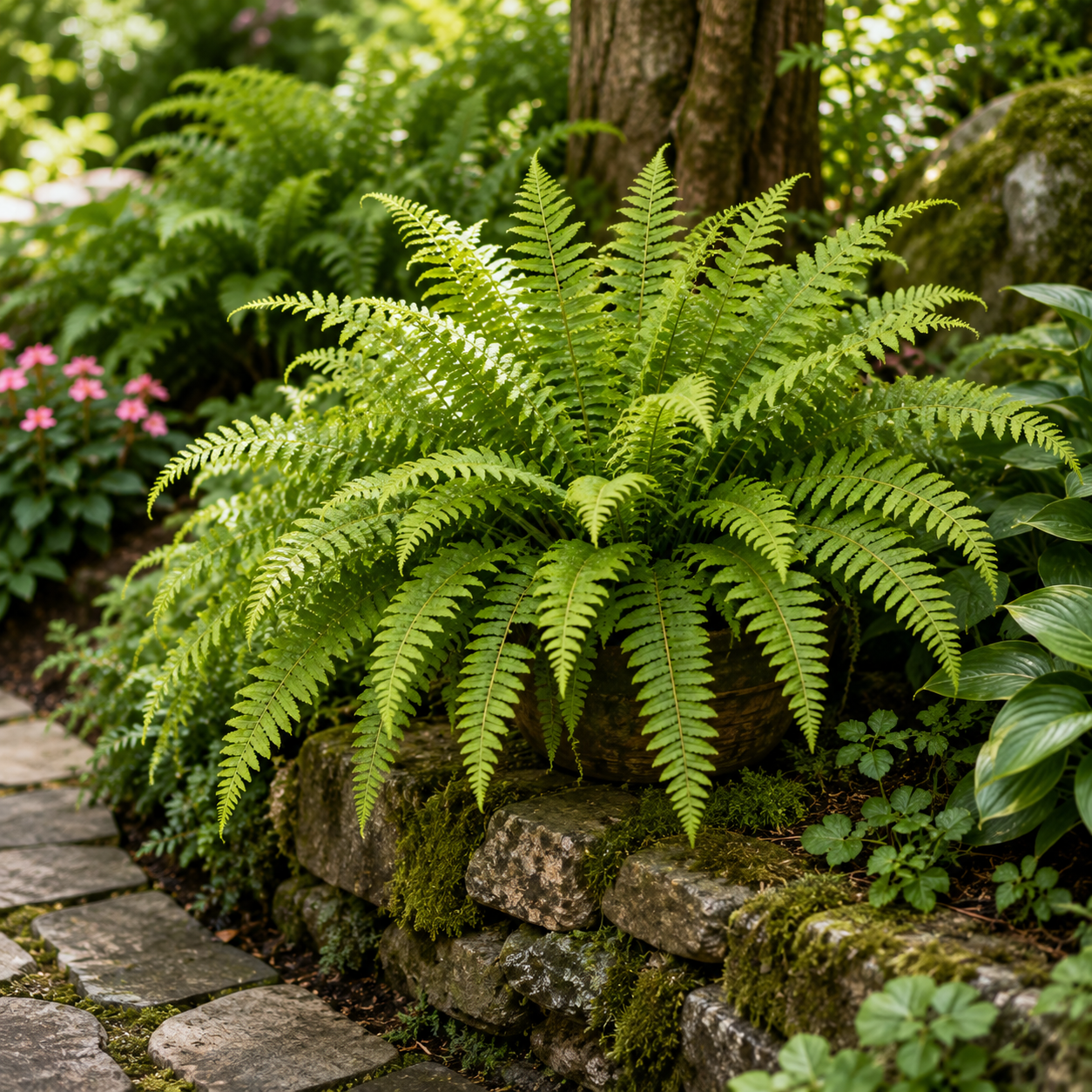
- Under mature trees
- Woodland gardens
Avoid prolonged direct afternoon sunlight, which can scorch delicate fronds.
Watering Tips
Ferns enjoy evenly moist soil but dislike sitting in water.
For healthy growth:
- Water when the top inch of soil begins to dry.
- Keep outdoor soil consistently moist during hot weather.
- Reduce watering slightly during winter.
Proper drainage helps prevent root rot.
Humidity Matters
Many fern varieties naturally grow in humid forests.
Increase humidity by:
- Using a pebble tray
- Running a humidifier
- Grouping plants together
- Misting occasionally (if appropriate for the species)
Indoor ferns generally perform best when humidity stays above average.
Best Soil for Ferns
Ferns prefer loose, well-draining soil rich in organic matter.
A quality potting mix combined with compost or peat moss provides the moisture retention and drainage that most fern varieties need.
Fertilizing Ferns
Ferns are light feeders.
Apply a balanced liquid fertilizer at half strength once a month during spring and summer.
Avoid over-fertilizing, which may damage delicate roots.
Common Problems
Watch for these common issues:
- Brown leaf tips: Low humidity or underwatering
- Yellow fronds: Overwatering or poor drainage
- Slow growth: Insufficient light or nutrients
- Crispy leaves: Too much direct sunlight
Adjusting watering and light conditions usually solves most problems.
Decorating With Ferns
Ferns fit beautifully into many garden styles.
Popular ideas include:
- Hanging baskets on porches
- Woodland shade gardens
- Tropical patio containers
- Bathroom plant displays
- Living walls
- Mixed container gardens
Their graceful foliage complements both modern and traditional landscapes.
Final Thoughts
With so many beautiful fern varieties available, it’s easy to find one that suits your home or garden. Whether you choose a classic Boston Fern, an elegant Maidenhair Fern, or a dramatic Staghorn Fern, providing the right combination of shade, moisture, and humidity will keep your plants healthy for years.
Once established, ferns reward gardeners with lush greenery that adds texture, freshness, and timeless beauty to almost any indoor or outdoor space.